Goku, the ghee residue from our bilona pot
What stays at the bottom of the pot when the ghee is poured off. Nutty, rich, and closer to cheese than to anything else.
Telugu: గోకు (goku)
Made only on ghee days, in small quantities. Message us for the price and the next batch.
Ask on WhatsApp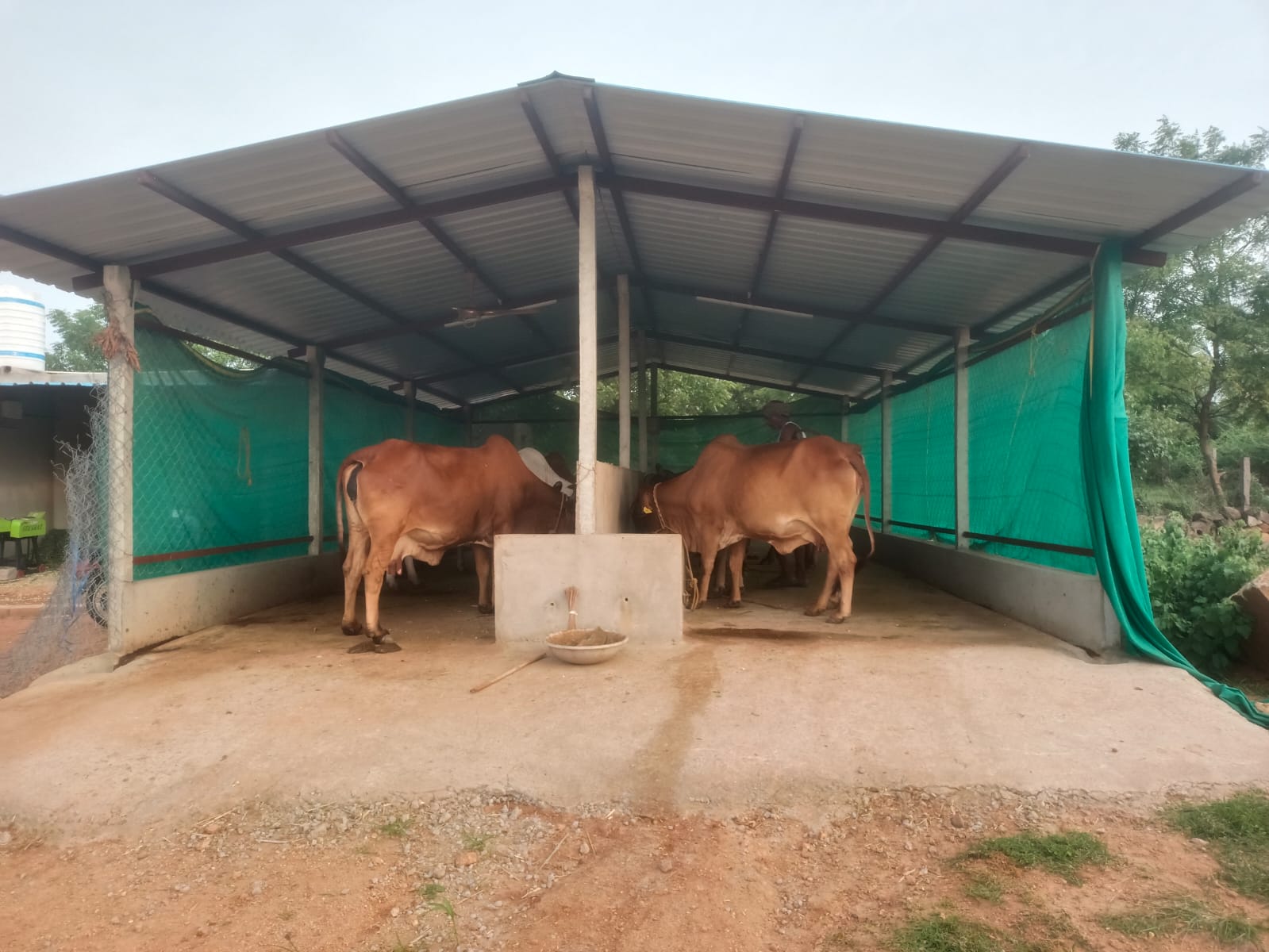
What it is
When butter churned from curd is simmered into ghee, the milk solids sink and toast slowly at the bottom of the pot. Once the ghee is poured off, that soft brown layer is the goku. Telugu homes call it goku, Tamil homes nei kasadu, and in the north it is khurchan.
What it tastes like
Nutty and rich, with the smell of fresh ghee and a taste most people compare to cheese. Ours comes from butter churned out of cultured curd, the same butter that becomes our bilona ghee.
Only on ghee days
There is goku only when we make ghee, and one pot leaves very little of it. We do not keep stock. Message us on WhatsApp and we will tell you when the next batch is due, how much there is, and the price.
Keeping it
Goku still holds some ghee, which is why it stays soft. Keep it in a closed jar in the fridge and always use a dry spoon.
Ways to use goku
Goku is already cooked. Warm it gently and add it near the end; if it is fried hard a second time it burns and turns bitter.
South Indian
- Hot rice with goku. Mix a spoonful into hot rice with a pinch of salt. The oldest way to eat it, and the best first taste.
- Goku laddu. Warm the goku, stir in powdered jaggery, roasted gram flour and a little cardamom, and roll into laddus while the mixture is still warm.
- Ragi or health-mix laddu. Roast ragi flour or sathu maavu, add goku and jaggery, and shape with a little ghee.
- With idli podi. Use goku in place of oil or ghee to wet your podi for idli and dosa.
- In pongal and upma. Stir a spoonful through just before serving.
North Indian
- Khurchan barfi. Cook goku with khoya, a little roasted besan and sugar until it leaves the sides of the pan. Set it in a tray and cut into squares.
- Atta laddoo. Roast whole wheat flour, mix in goku, sugar or jaggery and cardamom, and bind into laddoos.
- Peda. Warm goku on low heat, let it cool a little, knead with powdered sugar and cardamom, and shape.
- Paratha. Knead goku into the dough with a little besan, ajwain and kasuri methi. The parathas need very little ghee on the pan.
- Rich gravies. Use goku where a recipe asks for khoya, as in khoya paneer or khoya matar.
Continental
- Cookies and blondies. Bakers know goku as toasted milk solids, the flavor in brown butter. Fold a spoonful or two into chocolate chip or oatmeal cookie dough.
- Mashed potatoes. Beat a spoonful into hot mash with salt and pepper.
- Pasta. Toss hot pasta with goku, black pepper and garlic or fried sage.
- On toast. Spread on warm toast with honey, or with salt and chili flakes.
- Roasted vegetables and popcorn. Toss through while they are hot, as you would grated cheese.
- Pancakes and banana bread. Stir a spoonful into the batter.
Questions about our goku
What is goku?
Goku is the soft brown residue of milk solids left at the bottom of the pot when butter is simmered into ghee. It is also called ghee residue, khurchan or nei kasadu.
What does goku taste like?
Nutty and rich, with the smell of fresh ghee. Most people say it tastes like cheese.
How much does it cost?
Message us on WhatsApp for the price and for how much we have. Goku is made in small quantities, so we confirm both before taking an order.
Is goku available every day?
No. There is goku only on the days we make ghee, and each batch is small. Ask us when the next batch is due.
How should I store goku?
In a closed jar in the fridge. Always use a dry spoon.
Come and see the herd
We are on one and a half acres at Survey No. 250, Peddamangalaram, in the Chilkur Balaji Temple belt of Moinabad mandal — about 45 minutes from Hyderabad city. Families are welcome, and children especially. Call ahead on +91 92812 92775 so we know to expect you, or open the goshala in Google Maps.