It was a relief to finally get real desi cow ghee again. My joints have felt easier since I started taking it.
A customer, 78
Desi Cow Ghee
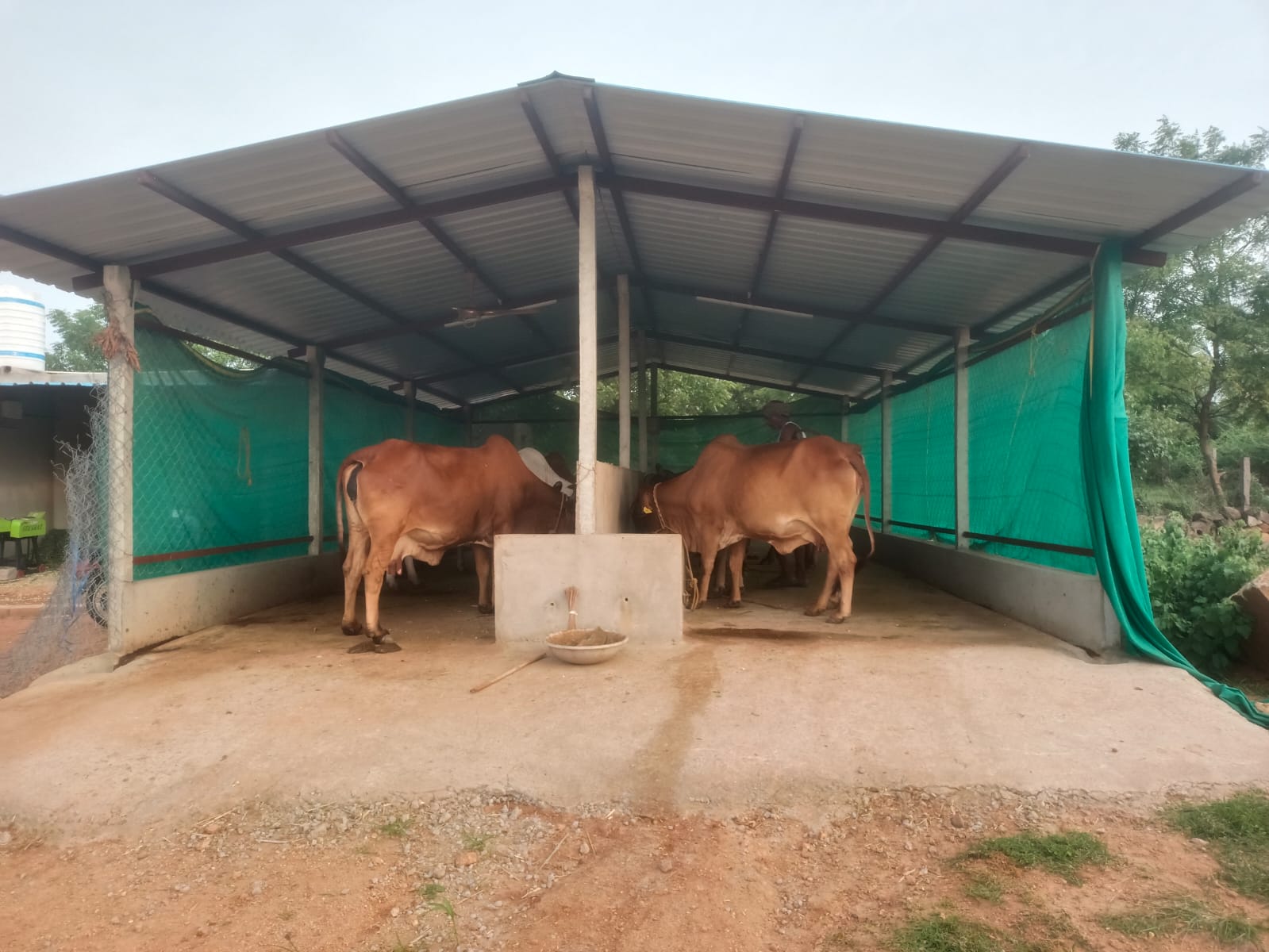
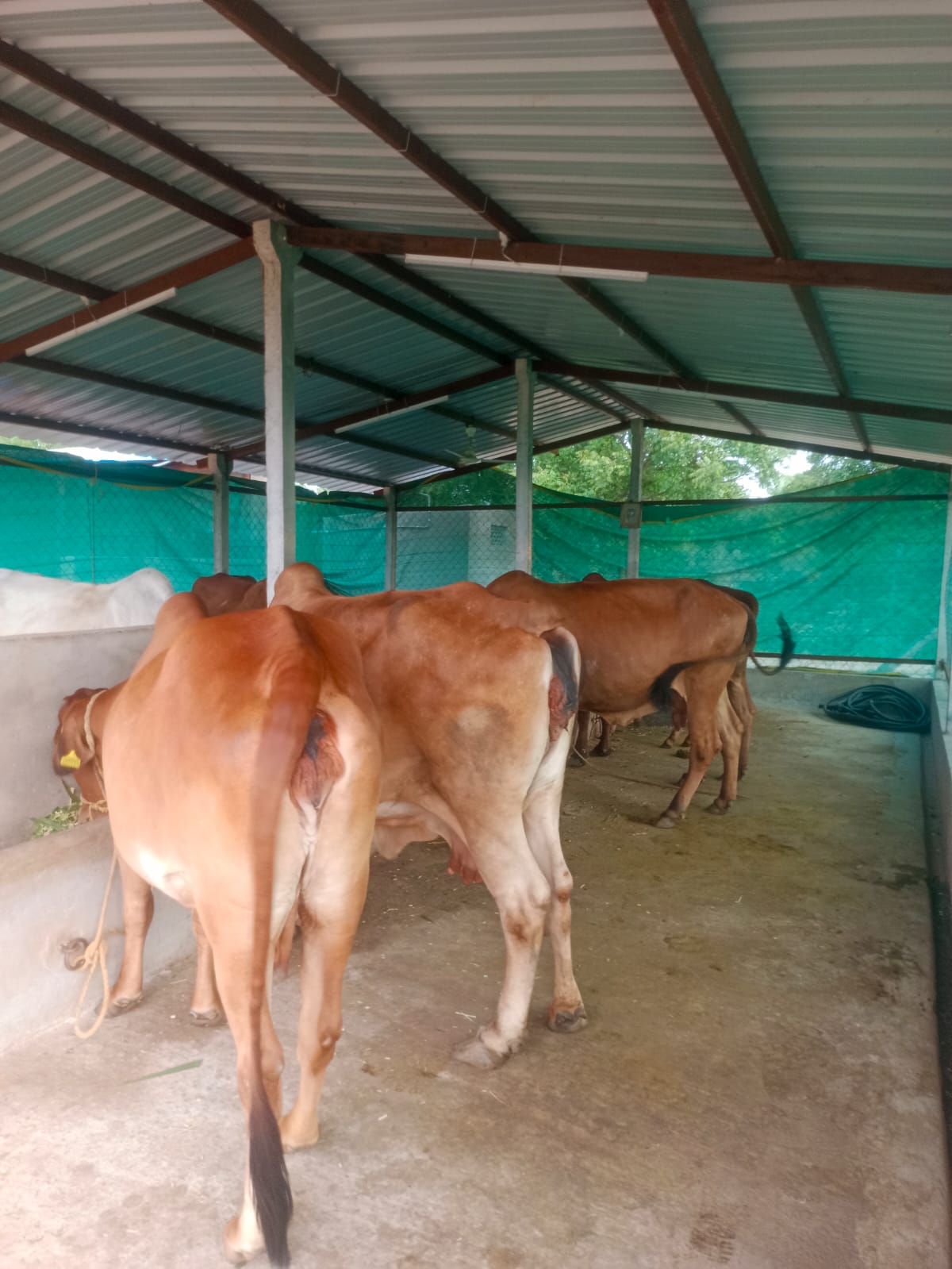
A small family goshala on one and a half acres in Peddamangalaram village, in the Chilkur–Moinabad belt of Rangareddy. Only humped desi cows — Sahiwal and Gir. Nothing blended, nothing skimmed on the sly, nothing hurried.
Order Online Read Our StoryA cup of pure desi cow milk used to be a certainty in every Indian home. Today it is a rarity. Most city dairies — even the ones that market themselves as "desi" — quietly blend their supply with milk from Jersey or Holstein-Friesian cows. The label says one thing; the tanker says another. It is not always dishonesty. Often it is simply what the numbers force.
We started Matru Sree Gaushala because that gap should not exist. If a family in Hyderabad wants milk from a humped Indian cow — the kind that produced ghee for every Vedic ritual, the kind that Ayurveda built its rasayana tradition around — they should be able to get it. Not as a luxury import. As a daily household staple.
Modern families are watching their children develop lactose sensitivity, eczema, recurrent bronchitis. Adults are watching joints stiffen a decade earlier than they should. The traditional understanding — and now a growing body of research on the A1/A2 beta-casein difference — points to one uncomfortable question: is the milk on today's shelves the same milk the human body evolved to digest? We make no claims that milk cures anything. We claim only this: what leaves our goshala is pure A2 milk from a humped Indian cow, produced the way she has always been kept.
In Sanatana Dharma, go seva — service to the cow — is placed above almost every other daily karma a householder can perform. Some in our tradition read this to mean one should not commercialize what comes from the cow at all. We respect that view. But we also know that a goshala that cannot sustain itself dies within a decade, and takes with it every cow it was built to protect. So we have made peace with a middle path: we sell what she gives freely, at prices that let us keep her well-fed, well-sheltered, and never sold to slaughter when her milk yield falls. This is not our business. This is our vrata.
Every rupee that comes back through these products goes into fodder, veterinary care, shelter maintenance, and the day when a Sahiwal mother of ours grows old and needs to be looked after for the rest of her natural life. That is the covenant. That is why the shop exists.
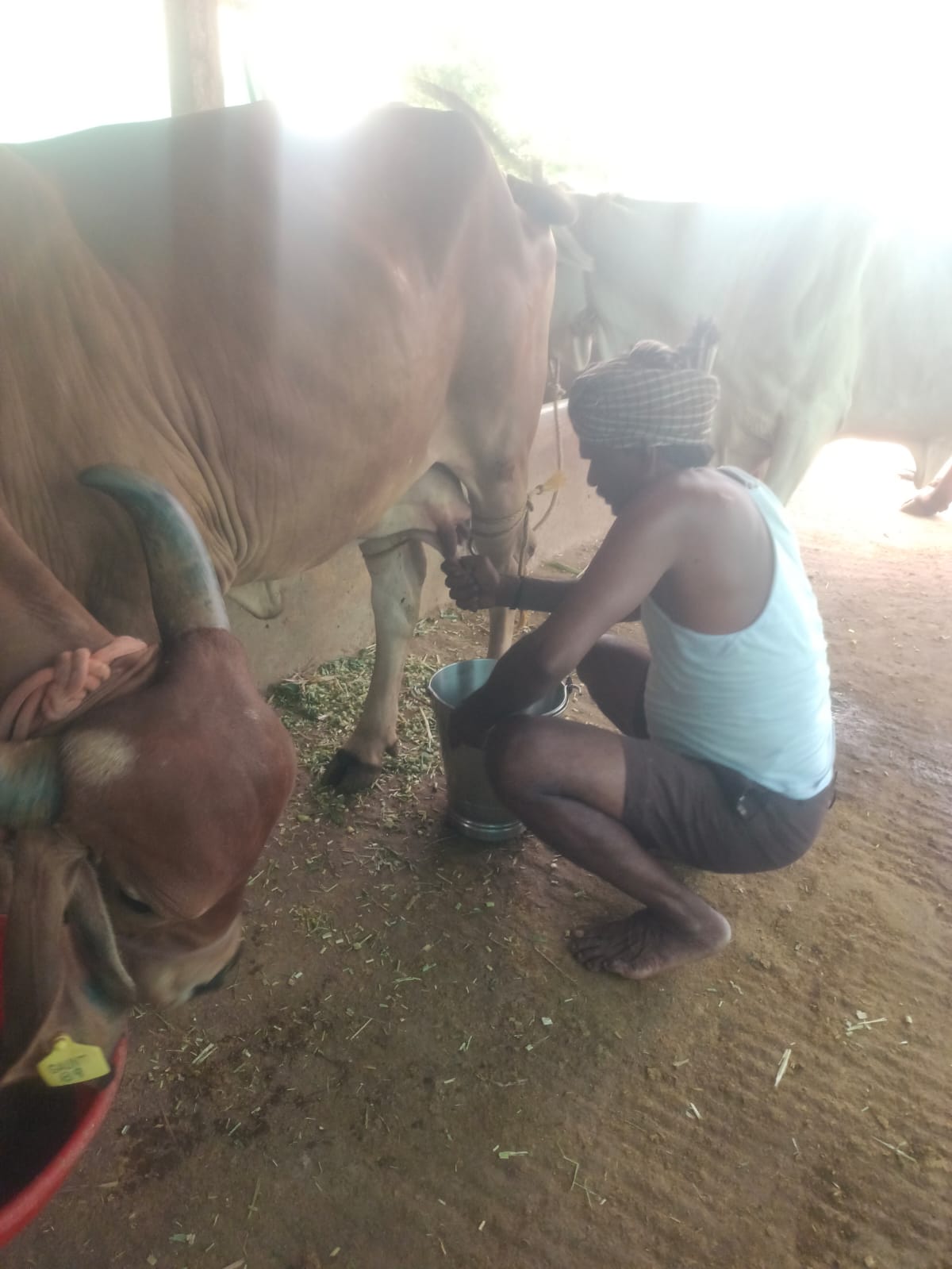
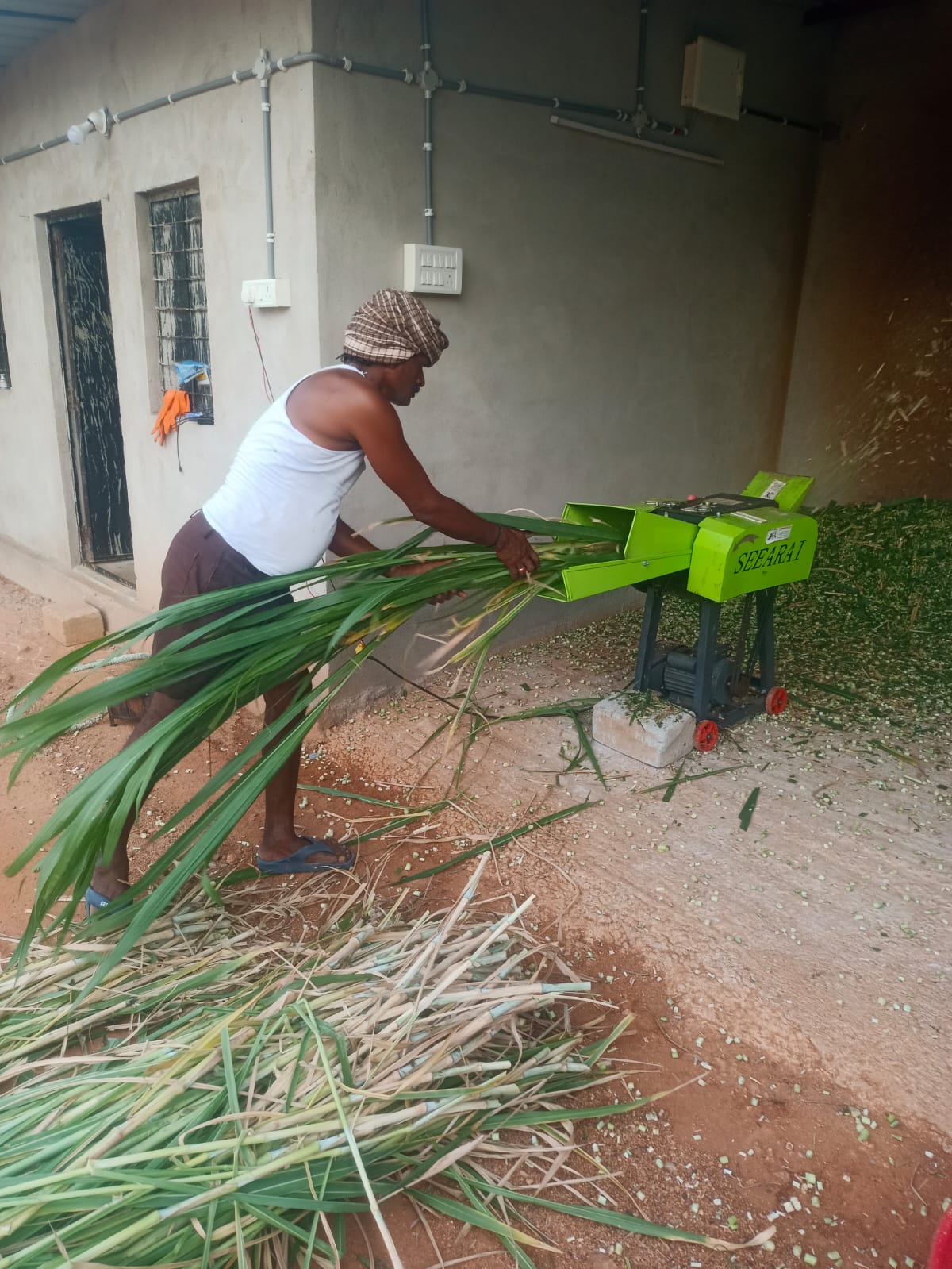
Only humped Bos indicus — Sahiwal and Gir. Grass-fed, hand-milked, unhurried. Fresh napier and jowar cut daily. No hormone injections, no growth boosters, no antibiotics unless a veterinarian prescribes it for a specific animal.
Every daily protocol — how we feed, when we cut fodder, how we support a mother through calving, which herbs we reach for if she takes ill — is drawn from the classical Sahadeva Pashu Shastra (सहदेव पशु शास्त्र), one of the great samhitas of traditional Indian veterinary Ayurveda. What our tradition wrote down centuries ago for the tending of royal herds, we now apply — quietly, faithfully — to a small family goshala.
All prices are farm-gate. Delivery is free within 10 km of the goshala at Peddamangalaram. Beyond 10 km we deliver bulk orders only — ₹1,500 or more, about 10 litres of milk — confirmed when we call you back. Curd and the larger items (ghee, gobar mudde, panchagavya, fertilizer) are pre-order only — please order at least 24 hours ahead. We do not deliver the same day.
Pure A2 Sahiwal/Gir milk, delivered fresh within hours of the morning milking. Cream-line naturally rises. No standardization, no dilution.
Add to order → Read more →Set fresh each day from our own whole A2 milk, cultured the traditional way and left to set undisturbed. Thick enough to hold a spoon, mildly sweet rather than sour. Ideal for curd rice, buttermilk, and daily dadhi.
Add to order → Read more →Same desi cow milk, with the cream separated out for our ghee. Ideal for households watching fat intake, or for making curd, paneer, and buttermilk.
Add to order → About our milk →Hand-churned bilona ghee from cultured curd — the traditional way. Roughly 25 litres of milk make one kilogram. Golden, granular, and fragrant enough that you will know the moment you open the jar.
Add to order → Read more →The soft brown residue left in the pot when our bilona ghee is simmered. Nutty and rich, with a taste most people compare to cheese. For hot rice, laddus, parathas and baking. Small batches only.
Ask on WhatsApp → Recipes and more →Hand-shaped and sun-dried dung cakes from our desi cows. Made for havan, yagna, agnihotra, and Navratri puja. Pack sizes: 10, 15, 25, 50 pieces. Bulk temple orders welcome.
Add to order → Read more →Matured, composted khaad from our own desi cows — rich, dark, and biologically alive. For kitchen gardens, terrace planters, and organic farms. Sold in 5 kg and 20 kg bags. Wholesale rates on request for farm-scale orders. We do not sell raw dung: this is the same khaad we use on our own fields.
Add to order → Read more →Prepared fresh to order in the traditional five-substance proportion — milk, curd, ghee, gomutra, and gobar. Made the morning of your pickup or delivery. Please read the section below on how to store and consume it.
Add to order → Read more →Choose your quantities below, then place the order here and pay online, or send it to us on WhatsApp. Milk and skim milk can start tomorrow morning. Curd, ghee, panchagavya, gobar mudde and gau khaad are pre-order and need at least 24 hours' notice. We do not deliver the same day. We will call you back to confirm your delivery slot and charge before anything is dispatched.
Your order is placed. Someone from the goshala will call you shortly to confirm the delivery slot.
Secure payment by Razorpay · UPI, cards, net banking · covers goods only; any delivery charge is settled on delivery
Pancha-gavya — the five from the cow. Ayurveda treats it as one of the finest rasayanas (rejuvenatives) in the entire pharmacopoeia. What makes it a rasayana is not any single ingredient, but the balance among the five. Miss one, or take them in the wrong proportion, and the medicine turns into just food.
Sattvic base. Nourishes ojas — the subtle essence that governs immunity, vitality, and lustre of the body.
Kindles the digestive fire (agni), populates the gut with beneficial flora, softens harshness of the other ingredients.
Carries the medicinal properties of the other four deep into the tissues. In Ayurveda, ghee is the classic anupana — the vehicle.
Bitter and pungent. Cleanses, scrapes accumulated ama (metabolic toxins), and awakens sluggish liver and lymph.
Antimicrobial and grounding. In classical texts, gomaya is used for its purifying quality — of body, food, and space.
Yes — for consumption. Traditional peya panchagavya is meant to be prepared fresh in small quantities. Once made, it is best consumed within 24 hours if kept at room temperature, or within 3 days if refrigerated. Beyond that, natural fermentation begins to change its character and it becomes more suited to agricultural use than to internal medicine.
Why the insistence on freshness? Because the potency of ghee, the microbial balance of curd, and the volatile principles of gomutra all shift with time. The synergy that makes panchagavya a rasayana lives in that fresh preparation. This is why we make it to order rather than bottle it in advance.
A separate, fermented preparation exists — a 21-day aged panchagavya used as an agricultural biostimulant and organic plant tonic. That version is entirely different in purpose. If you need panchagavya for your kitchen garden or farm, please tell us; we prepare it differently.
Please avoid or take only under vaidya supervision if you have: uncontrolled high blood pressure, active peptic ulcer, severe hyperacidity, high Pitta constitution with heat symptoms, or if you are pregnant.
The information above is drawn from classical Ayurveda and is offered for educational and cultural context. It is not a substitute for individualised medical advice. If you have a chronic condition or are on regular medication, please consult a qualified Ayurvedic vaidya or your physician before beginning panchagavya.
Every review below is from a real customer who buys from us. We do not publish names.
It was a relief to finally get real desi cow ghee again. My joints have felt easier since I started taking it.
The taste is like amrutham. It is worth drinking, not just eating.
Customers are describing their own experience. Our ghee is a food, not a medicine, and we make no claim that it treats any condition.
Bought from us before? We would be grateful to hear how it went — send us a line on WhatsApp.
Yes. Every cow in our herd is a humped Bos indicus — Sahiwal or Gir. We keep no Jersey, no Holstein-Friesian, and no crossbreds, so there is no A1 milk on the premises to blend with. That is the whole reason the goshala exists. You are welcome to visit and see the herd yourself before you order.
Yes. Delivery is free within 10 km of the goshala at Peddamangalaram. Beyond 10 km we deliver bulk orders only — ₹1,500 or more, about 10 litres of milk. We call to confirm every order before anything is dispatched. You are also welcome to collect from the goshala.
The traditional way, from cultured curd rather than from cream. We set the whole milk into curd, hand-churn that curd to draw out the butter, and then simmer the butter slowly into ghee. It takes roughly 25 litres of milk to make one kilogram, which is why it costs what it costs. We do not use a cream separator or a centrifuge — that is a different product, and it is not bilona.
Yes. Our curd is set fresh each day from our own whole A2 milk — nothing bought in, nothing blended. It is cultured and left to set undisturbed, so it comes out thick and mildly sweet rather than sour.
Milk and skim milk can start from the next morning. Curd, ghee, panchagavya, gobar mudde and gau khaad are made or packed to order, so please give us at least 24 hours. We do not deliver the same day. For bulk temple and gurukulam orders, a few days' notice helps us serve you properly.
When you order on this website you can pay straight away through Razorpay — UPI, cards or net banking — or choose to pay on delivery. Online payment covers the goods; any delivery charge is confirmed on our call and settled on delivery. If you order on WhatsApp, you pay on delivery. If we ever cannot fulfil a paid order, we refund it in full.
Please do. We especially welcome families with children, so a new generation can meet a real desi cow and feed her by hand. We are about 45 minutes from the city in the Chilkur Balaji Temple belt. Call ahead on +91 92812 92775 so we know to expect you.
Yes, and gladly. We give preference to daily havan traditions and Vedic gurukulams for gobar mudde, ghee and havan supplies. Tell us the quantity and the dates in the notes box when you order, or call us directly.
For milk and skim milk, delivery is free within 10 km of the goshala; beyond that we deliver bulk orders only. For curd, ghee, panchagavya, gobar mudde, and gau khaad — please order at least 24 hours ahead. We do not deliver the same day.
WhatsApp: +91 92812 92775
Call: +91 92812 92775
Email: sowmya.josyula@matrusreegaushala.com
Temple and community bulk orders for gobar mudde, ghee, and havan supplies are always welcome. We give preference to daily havan traditions and Vedic gurukulams.
You are welcome to come and see the cows. We especially welcome families with children, so a new generation can meet a real desi cow, learn to feed her by hand, and take home a memory that a supermarket cannot supply.
Matru Sree Gaushala Samstha Pvt Ltd
Survey No. 250,
Peddamangalaram Village,
Peddamangalaram Panchayat,
Moinabad Mandal,
Rangareddy District,
Telangana
Open the goshala in Google Maps →
About 45 minutes from Hyderabad city, in the Chilkur Balaji Temple belt. Please call ahead on +91 92812 92775 so we know to expect you.